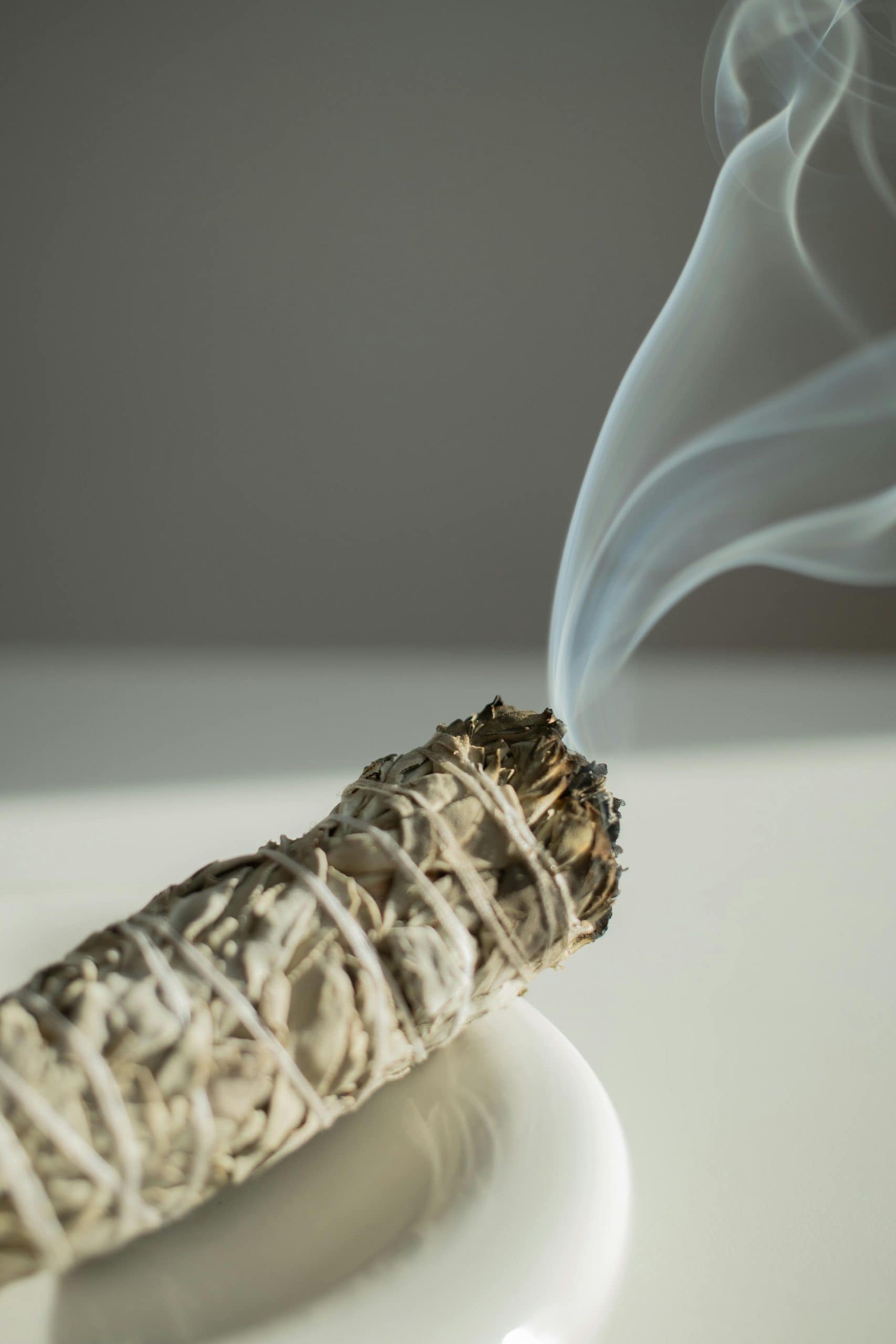
At first glance, sage might just look like a bundle of dried leaves tied with string — something you’ve seen in a shop or on a friend’s altar. But this plant carries more than just an earthy scent. It carries intention. Tradition. Power.
And when burned with purpose, it becomes a bridge between the seen and unseen.
So… what is sage, really?
🌱 A Sacred Plant with Purpose
Sage is a perennial herb — part of the Salvia family — and its name comes from the Latin salvare, meaning “to heal” or “to save.”
That etymology alone says a lot. Across cultures and generations, sage has been respected as both medicine and message— a plant believed to cleanse, bless, protect, and realign.
There are many types of sage, but the one most commonly used for spiritual and energetic cleansing is white sage (Salvia apiana), native to the southwestern United States. It’s known for its strong aroma and thick, spiraling smoke when burned — qualities that made it a favored tool for purification rituals long before the modern world discovered it.
🔥 Why Do People Burn Sage?
Burning sage — also known as smoke cleansing or, in some traditions, smudging — is the intentional act of using sage smoke to shift the energy of a space, a person, or even a thought.
When the smoke rises, it’s more than a physical reaction. It’s symbolic.
It represents release, transformation, and elevation — letting go of stagnant or negative energy so something new can take form.
People burn sage:
- To clear their home after arguments or heavy emotions
- Before prayer, meditation, or spiritual work
- When moving into a new space
- To reset their energy field or cleanse after being around draining environments
But burning sage isn’t about the smoke itself — it’s about the intention behind it.
The real power is in your awareness and your willingness to consciously let go.
📚 Is There Science Behind It?
Surprisingly, yes.
A 2007 study published in the Journal of Ethnopharmacology found that burning certain medicinal herbs — including sage — reduced airborne bacteria by up to 94%. The air remained purified for up to 24 hours.
Other studies suggest that the aroma of burning sage may help improve mood, lower stress, and even enhance memory.
So in a way, ancient practices are now being validated by modern research — showing that sage works on more than just a spiritual level.
🎨 More Than a Trend
In today’s world, sage is often sold in stores, used in TikTok rituals, or added to trendy “wellness routines.” But this plant’s sacred roots deserve respect.
The use of sage in ceremonial cleansing comes from Indigenous cultures, particularly Native American traditions. For many tribes, sage is more than a tool — it is a spirit, honored and offered, not just used.
So if you choose to burn sage, do so with reverence — not performance.
At DaManIAm, I don’t use the word smudging unless referencing the specific cultural ceremony.
Instead, I teach what I call Saging — the conscious, intentional act of using sage to reset energy, honor space, and return to presence.
🌬️ When to Sage
You don’t need a special event to burn sage.
You can Sage:
- First thing in the morning, to clear dream residue and begin your day centered
- Mid-day, after hard conversations or draining interactions
- Before rest, to return to calm
- Before you pray, meditate, write, or simply breathe with intention
In short — Saging is energetic hygiene.
Just like brushing your teeth or washing your hands, it’s a way of honoring what you carry and what you release.
🧘🏾 Final Reflection
So… what is sage?
It’s a plant, yes — but also a presence. A purifier. A reminder.
It reminds us that energy can be shifted, cleared, and transformed — not just endured.
It’s not a magic wand.
It’s a conscious choice to say:
“I respect this space. I respect this energy. And I choose to bring clarity into both.”
Burn with purpose.
Breathe with presence.
Sage before you enter.